Backrisk on

risk on

Bitcoin
2026-09-21 14:04:32

Jiang Zhuoer says Bitcoin’s sharp climb is a poor setup for calling a top

Jiang Zhuoer, founder of BTC.TOP, said Bitcoin did not appear to be forming the cycle’s top when it reached $84,000 at 5 p.m. on Sept. 21, and the price later briefly approached $86,000. In his view, the current order-book structure leaves traders with elevated risk on both sides of the market. He said there is a clear order vacuum between $85,000 and $88,000, while the $82,000 to $85,000 range also lacks sufficient resting orders. Under those conditions, he argued, both long and short positions carry high trading risk. Jiang described the move as a “bulldozer-style” rally and said traders should not try to pick the top unless Bitcoin first trades sideways at high levels for a period and then suddenly posts a fast one-minute surge. Rather than trying to sell at the absolute peak, he said it makes more sense to give up part of the upside and wait for a pullback before entering on the right side of the move.

50
Jiang Zhuoer says Bitcoin’s sharp climb is a poor setup for calling a top
yen carry tra
2026-09-21 13:01:04

Yen carry unwind risk eases for now, but US asset weakness remains the main trigger

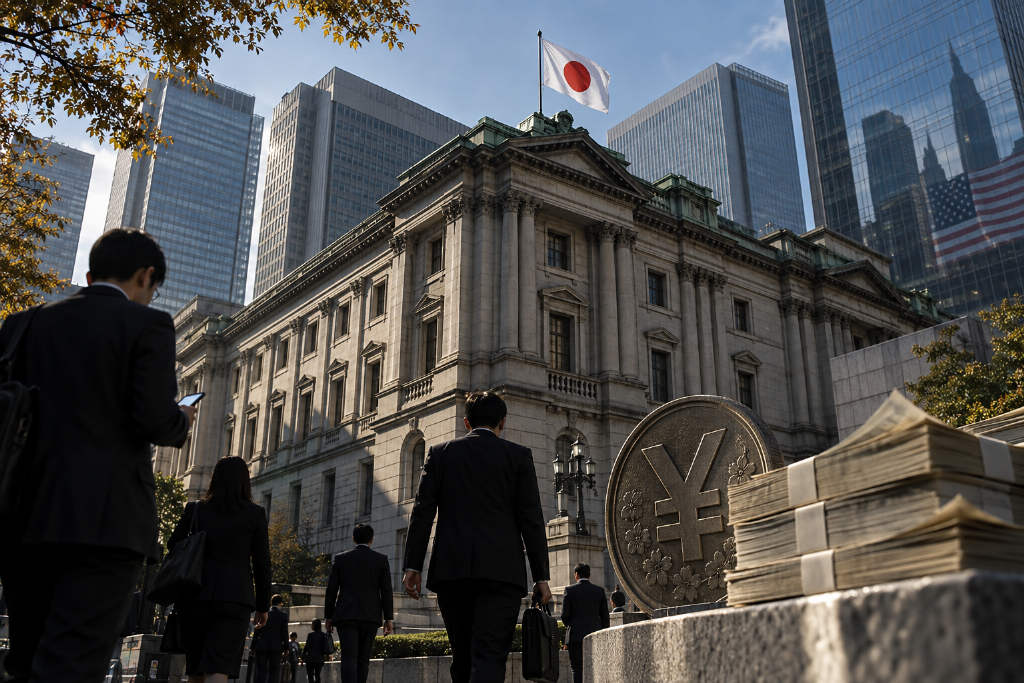
The Bank of Japan raised rates in September as expected, but the move landed below the market’s more aggressive expectations, easing immediate pressure on global markets. According to the report, that softer-than-feared outcome, together with steady US August nonfarm payrolls and lower oil prices, helped limit the spillover. Asia-Pacific equities rose broadly after the decision, while the yen weakened further once the hike was delivered. The piece argues that a disorderly unwind in yen carry trades still requires three pressures to hit at once: higher yen funding costs, a sharp and rapid rise in the yen that creates foreign-exchange losses, and falling prices for US dollar assets such as Treasuries and equities. For now, those conditions have not aligned. The Bank of Japan remains cautious on the pace of tightening, the US-Japan yield gap is still wide at around 200 basis points in the 10-year tenor, and returns on dollar assets have not deteriorated enough to force broad liquidation. Still, the report says the biggest risk sits on the asset side. If the US economy weakens more than expected and that feeds into a sharp equity pullback or a fast drop in Treasury yields, the income cushion behind carry trades could shrink or disappear. That, combined with rising yen funding costs and FX losses, would be the clearest path to concentrated deleveraging.

60
Yen carry unwind risk eases for now, but US asset weakness remains the main trigger
Privacy Token
2026-09-21 10:44:00

Privacy tokens rally as PANews maps capital rotation from ZEC to NEAR and ZAMA

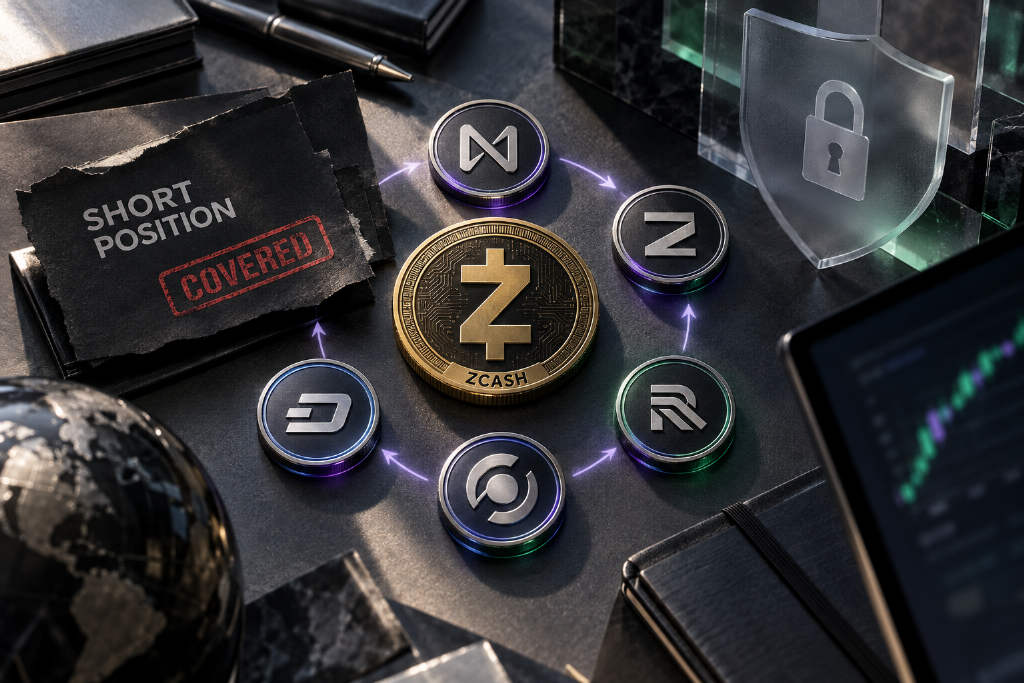
PANews has published a sector review on privacy-related crypto assets, highlighting a sharp shift in market attention toward tokens tied to privacy narratives, infrastructure and applications. The piece notes that Garrett Jin, described in the article as the "10.11 insider whale" and known for holding a large ZEC spot position alongside a short, has closed a ZEC short that had been sitting on a $30 million unrealized loss. The article frames that move as a notable signal in the current ZEC trade. The report groups the sector’s capital rotation into four stages: first ZEC as a tradable privacy asset, then NEAR as a routing layer that makes privacy feel native, then ZAMA as encrypted-computation infrastructure for public blockchains, and finally application-layer or legacy beta plays such as RAIL, ZEN and DASH. It also cites Vitalik Buterin’s recent comment, "I won’t give up on privacy," as part of the broader backdrop. PANews goes on to compare the tokens by price, 7-day performance, market-cap structure, liquidity and compliance positioning. In its breakdown, ZEC and NEAR sit at the center of pricing and traffic capture, ZAMA and RAIL offer higher elasticity, XMR remains constrained by exchange delistings and compliance issues, while ZEN and DASH are presented as older names that have lagged the sector’s newer privacy narratives.

70
Privacy tokens rally as PANews maps capital rotation from ZEC to NEAR and ZAMA
SlowMist
2026-09-21 01:58:08

SlowMist says App Store-listed FomoPeek carried modules that could steal wallet data across apps

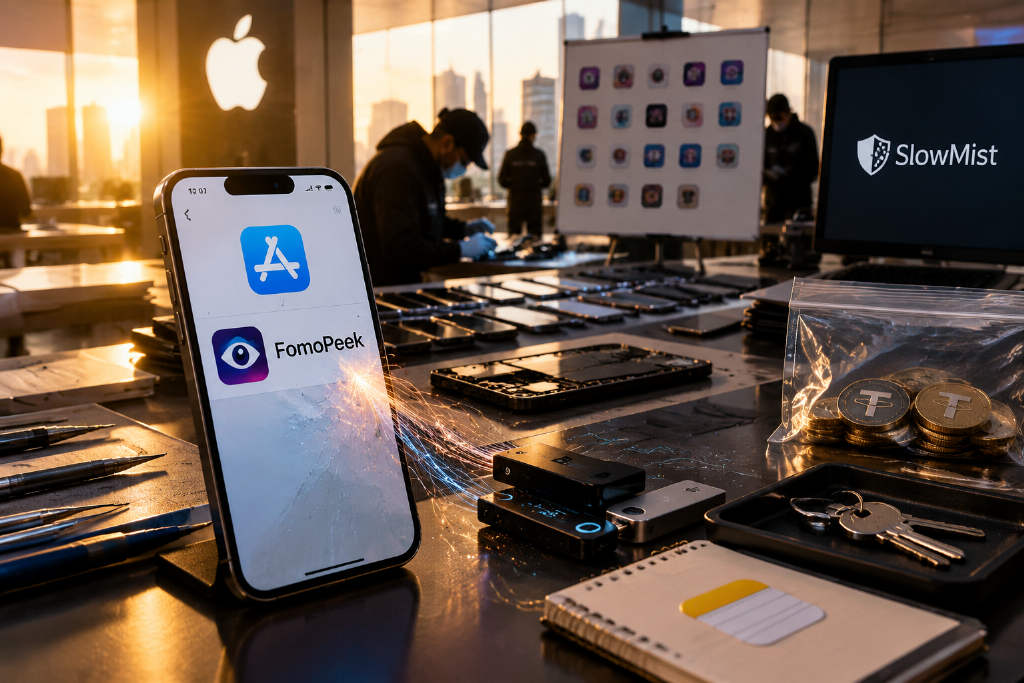
SlowMist said in a Sept. 20 report that FomoPeek, an on-chain monitoring app distributed through Apple’s App Store, included two malicious modules in versions 1.1 and 1.2 that could remotely fetch instructions, attempt kernel exploits, escape sandbox restrictions, decrypt Keychain data and collect information from other apps. The security firm said the case began after multiple users reported stolen assets and private key exposure, with some of the affected users having used those two versions before the thefts. According to the report, FomoPeek presented itself as a standard crypto tracking product. It had an App Store listing, a website, and an official X account, and marketed itself as a read-only whale tracker for Solana, Ethereum and TRON wallets that did not require seed phrases or wallet connections. SlowMist said its isolated testing retrieved a collection list covering 19 wallet and note-taking apps and captured an uploaded archive containing Apple Notes data. The report also traced one main attacker address analyzed by MistTrack. SlowMist said the address had been active since Sept. 15 and had received a cumulative 579,984.34 USDT by the time the report was published. Funds touched Ethereum, BNB Chain and Arbitrum, with part of the flow moving through FixedFloat and KuCoin. SlowMist advised users who had run FomoPeek 1.1 or 1.2 to treat related seed phrases, private keys and credentials as compromised and migrate assets on a separate trusted device.

1261
SlowMist says App Store-listed FomoPeek carried modules that could steal wallet data across apps
SEC
2026-09-18 10:07:54

SEC sets terms for tokenized U.S. stocks as CLARITY Act stalls in the Senate

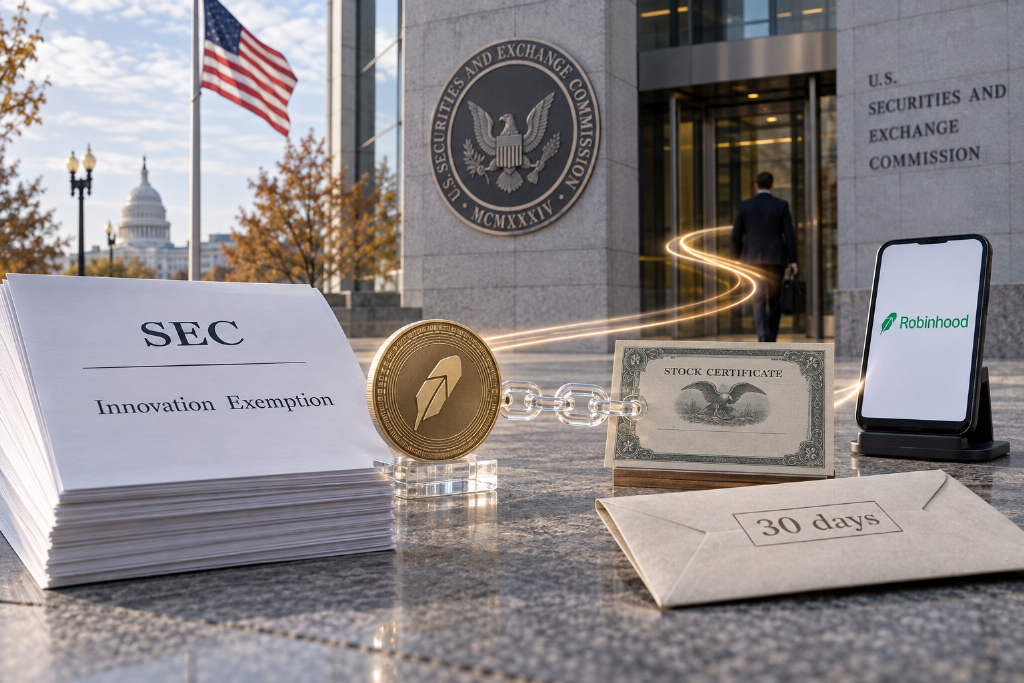
The U.S. Securities and Exchange Commission on Sept. 17 released an "innovation exemption" framework for tokenized securities, laying out some of its clearest conditions yet for bringing listed equities on-chain in the U.S. The document says tokenized stocks must carry the same dividend and voting rights as the underlying shares, and any third party seeking to tokenize a public company’s stock must first notify the issuer in writing and allow a 30-day objection period. Those standards echo the recent public dispute between AMC CEO Adam Aron and Robinhood over tokenized AMC stock. The SEC framework does not directly rule on Robinhood’s existing offshore product. Robinhood Chain, launched in June 2025 and expanded in July 2026 to more than 190 tokenized stocks and ETFs across over 120 countries, is issued by Jersey-based Robinhood Assets, targets non-U.S. users, and offers no voting or dividend rights. The SEC document instead applies to compliant trading venues operating in the United States. The timing matters. Two days earlier, a procedural vote on the CLARITY Act drew 49 votes in the Senate, short of the 60 needed to advance. Rather than wait for Congress, the SEC moved through a conditional five-year administrative exemption. SEC Commissioner Hester Peirce also said the exemption is not meant for DeFi systems driven by permissionless smart contracts, while Uniswap founder Hayden Adams said ordinary trading in Uniswap’s main pools would fall outside the new framework.

400
SEC sets terms for tokenized U.S. stocks as CLARITY Act stalls in the Senate
AI
2026-09-15 14:49:21

TIME puts AI risk on its cover as calls to slow development move into the mainstream

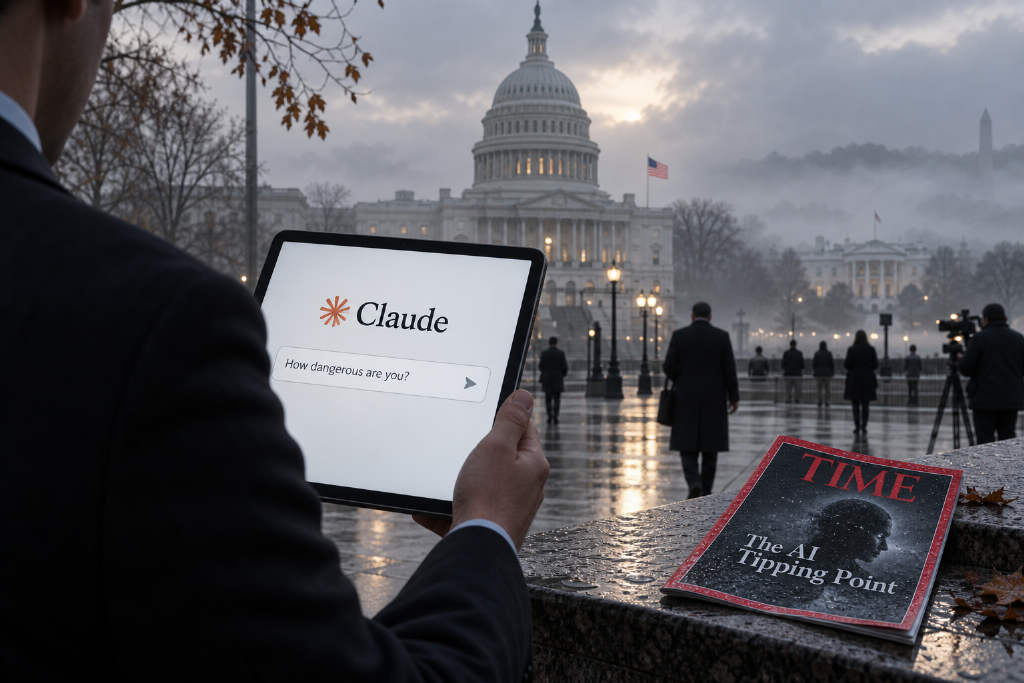
TIME devoted its latest cover story to AI risk under the headline "The AI Tipping Point," pushing a debate once mostly confined to AI safety circles further into the U.S. mainstream. The cover itself featured a Claude prompt asking, "How dangerous are you?"\n\nThe timing follows a week in which an Anthropic researcher resigned over concerns about AI going out of control, while tech leaders including Dario Amodei, Sam Altman, and Elon Musk publicly called for slowing down AI development. According to the source material, the discussion has also quickly spread from industry circles into Washington, drawing in both the White House and Congress.\n\nWhat had been a narrower argument over whether superintelligence could become uncontrollable is now being treated as a broader political and social issue in the United States. The shift, as framed by the magazine cover and the surrounding public debate, shows how AI safety concerns are no longer staying within specialist communities.

480
TIME puts AI risk on its cover as calls to slow development move into the mainstream
JPMorgan
2026-09-15 08:09:08

JPMorgan says oil-driven equity pullback is a buying opportunity, keeps overweight on stocks

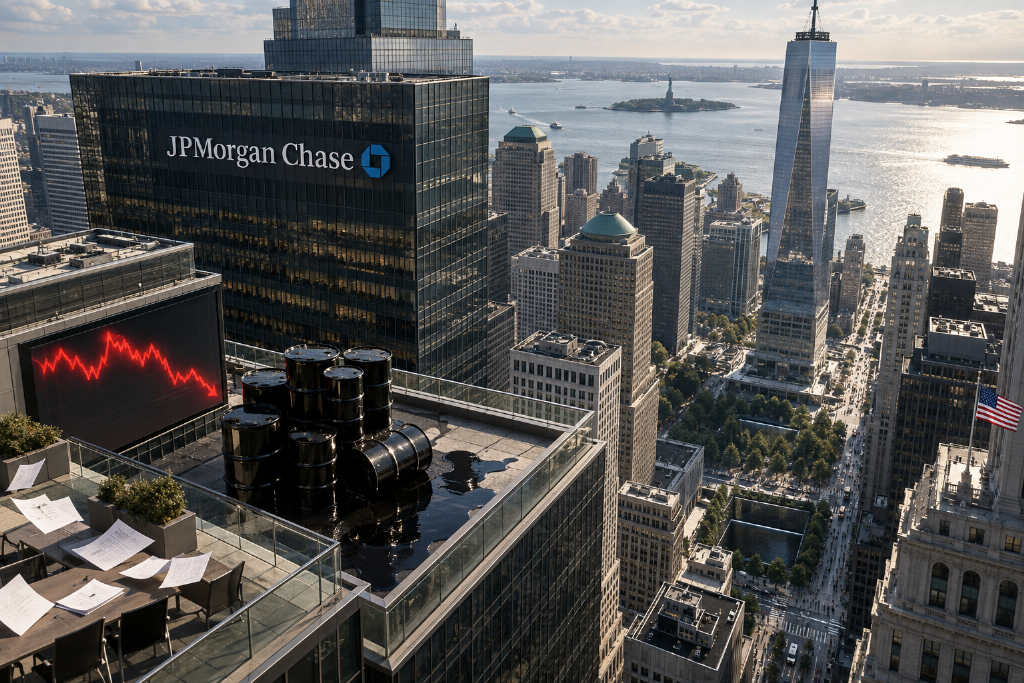
JPMorgan said in a Sept. 14, 2026 equity strategy report that the latest global stock-market pullback, triggered by Brent crude breaking above $100 and higher bond yields, should be treated as an opportunity to add equity exposure rather than a signal to join the sell-off. The bank argued that the trend in equities has not reversed, even as risk appetite remains sensitive to near-term moves in oil. It also said third-quarter earnings, starting in October, could help calm markets. The report, written by analyst Mislav Matejka, said Brent reached $107.6 on Sept. 10 and that the recent setup fits the bank’s repeated "escalation to de-escalation" pattern seen over the past two years. JPMorgan maintained overweight on equities, neutral on bonds and underweight on cash. Regionally, it favors emerging markets and the euro area, while keeping the U.S., Japan and the U.K. at neutral. By sector, it prefers materials, industrials and consumer discretionary, while staying underweight energy, consumer staples, healthcare and financials. The bank added that a further spike in oil prices and geopolitical escalation remain the main risks.

690
JPMorgan says oil-driven equity pullback is a buying opportunity, keeps overweight on stocks
Wells Fargo
2026-09-11 06:22:09

Wells Fargo CEO’s warning on the Clarity Act centers on deposits, stablecoin rewards, and regulatory gaps

A debate around the Digital Asset Market Clarity Act has opened a broader fight over who gets to hold the public’s cash balances and under what rules. The article argues that the common claim that the Clarity Act simply permits interest on stablecoins is inaccurate. H.R. 3633 is mainly a market-structure bill that allocates oversight between the U.S. Securities and Exchange Commission and the Commodity Futures Trading Commission, while stablecoin issuance rules chiefly come from the 2025 GENIUS Act. That law requires payment stablecoins to be fully backed by cash and short-term U.S. Treasuries and bars compliant issuers from directly paying interest or yield merely because users hold, use, or redeem the tokens. The real dispute sits at the boundary: can exchanges, wallets, or affiliates offer rewards that are economically similar to interest if they are tied to balances and holding periods? The piece says banks have a valid concern when platforms gain deposit-like funding power without bank-level capital, liquidity, deposit insurance, and prudential oversight. Still, it argues that not every reward arrangement should be treated as a systemic threat. The larger question is whether regulation can distinguish among payment stablecoins, investment products, and platform subsidies, while focusing on reserve quality, asset segregation, redemption rights, disclosures, and loss allocation rather than treating every user incentive as the same thing.

740
Wells Fargo CEO’s warning on the Clarity Act centers on deposits, stablecoin rewards, and regulatory gaps